The IEC 62443 series has become the leading global framework for securing industrial automation and control systems (IACS). It defines how organizations should protect operational technology (OT) environments, starting from corporate policy and extending down to technical implementation in substations and control centers.
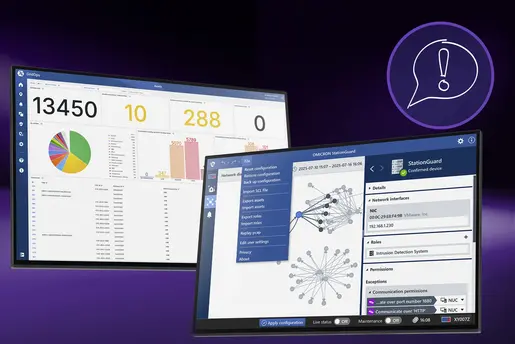
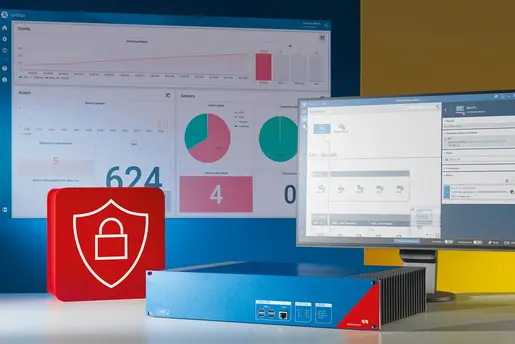
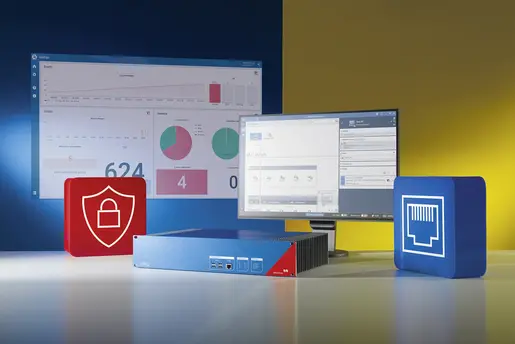
For utilities, meeting these requirements is not only about compliance but also about achieving sustainable operational resilience. One of the most practical ways to support IEC 62443 objectives is through continuous network monitoring. This is exactly where StationGuard becomes an essential part of the solution. Designed specifically for power-grid OT networks, StationGuard combines protocol-aware intrusion detection with asset visibility and event monitoring, which enables utilities to meet several IEC 62443 goals within a single system.

Meeting the IEC 62443 requirements is not only about compliance but also about achieving sustainable operational resilience.
Defense and Detection in Depth
IEC 62443-1-1 §5.3, §5.9 and IEC 62443-3-3 SR 3.3, SR 7.6
IEC 62443 promotes the principle of defense-in-depth, meaning that multiple protection layers must exist between an attacker and critical assets. Even if one barrier fails, such as a misconfigured firewall or outdated device firmware, other layers should still prevent or at least detect the incident.
StationGuard directly supports this principle by acting as the detection layer within OT networks. It continuously analyzes communication between IEDs, PLCs, RTUs, and SCADA systems. Any deviation from the expected behavior, such as unknown IP connections, unexpected GOOSE or MMS traffic, or irregular command sequences, triggers an alert.
By providing deterministic and rule-based detection in addition to signature-based detection (pattern matching), StationGuard enables utilities to identify cyber intrusions, device malfunctions, or engineering errors in real time. This function fulfills the monitoring and detection expectations defined in IEC 62443-3-3 SR 3.3 (“Security monitoring”) and SR 7.6 (“Network and communication flow control”).
Supervising Zones and Conduits
IEC 62443-1-1 §5.8–§5.9 and IEC 62443-3-2 §4.2
Another key concept within IEC 62443 is the definition of security zones and conduits. These represent logical boundaries inside a network, for example between a protection relay bay or PLC and a control center. Conduits define the communication paths that connect these zones, each with defined trust levels and security requirements.
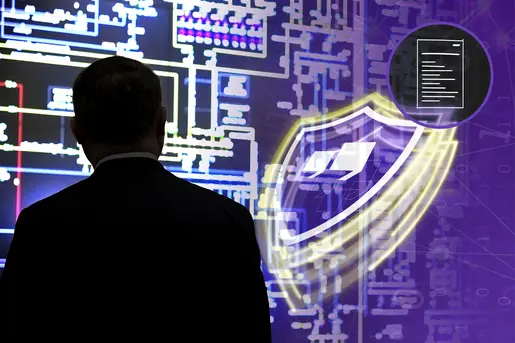
StationGuard strengthens this architecture by monitoring all communication that flows across conduits. It ensures that only authorized devices exchange data and that the communication follows the expected OT protocols and PDUs. If an unexpected device, VLAN, or multicast appears on the network, StationGuard immediately informs the operators. This capability supports compliance with IEC 62443 principles for segmentation and boundary protection, as introduced in -1-1 §5.8 and detailed in -3-2 §4.2.
In practice, this means that StationGuard helps utilities maintain visibility across complex substation networks where thousands of packets per second cross multiple VLANs and redundant links. Instead of relying solely on static firewall configurations, StationGuard provides ongoing assurance that the zone and conduit model defined during system design is also respected during live operation.
Vulnerability and Threat Management
IEC 62443-2-1 §A.3.3 and IEC 62443-3-2 §4.5.3
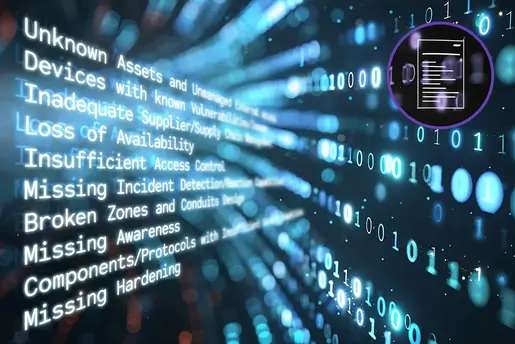
IEC 62443 emphasizes risk-based security management and continuous assessment of vulnerabilities. In large power-grid environments, the number of assets and firmware versions makes manual tracking nearly impossible.
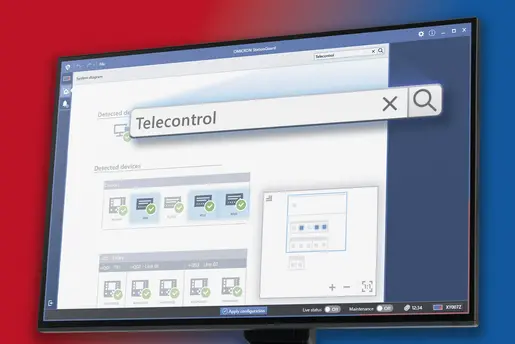
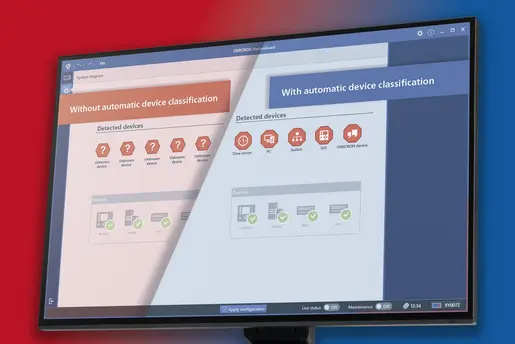
Through its Vulnerability Management feature, StationGuard compares detected assets with known CVEs and vendor advisories. This helps utilities quickly identify which devices are affected by vulnerabilities and prioritize mitigation efforts accordingly. Combined with its asset discovery capability, this supports the risk assessment and monitoring requirements defined in IEC 62443-2-1 Annex A.3.3 (“Monitor and evaluate the CSMS”) and IEC 62443-3-2 §4.5.3 (“Risk assessment and treatment”).
While patching remains the responsibility of engineering and maintenance teams, StationGuard provides the necessary context for informed decisions. Utilities can clearly see which vulnerabilities are relevant, which assets are exposed, and what actions are needed to reduce risk.
Incident Detection and Response
IEC 62443-2-1 §A.3.4.5 and IEC 62443-3-3 SR 6.2
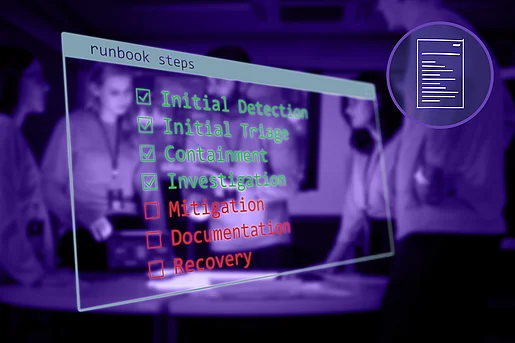
IEC 62443 requires that organizations have defined processes for detecting, documenting, and responding to cybersecurity incidents. Real-time alerts and historical data from StationGuard provide exactly this foundation.
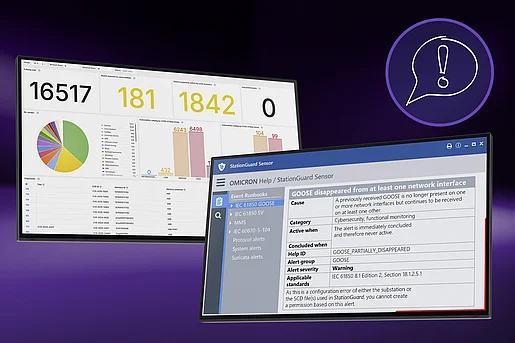
The system generates structured alerts and syslog messages that can be forwarded to central SIEM or SOC platforms, ensuring traceability and coordinated response between OT and IT security teams. Each alert includes protocol context, event details, and affected assets, which allows utilities to react precisely without guesswork or delay.
With these capabilities, StationGuard helps organizations move from a reactive stance toward a proactive Cyber Security Management System (CSMS) approach as envisioned in IEC 62443-2-1 §A.3.4.5 (“Incident detection, reporting and response”) and -3-3 SR 6.2 (“Incident response capability”).
IEC 62443-compliant with
StationGuard
StationGuard provides measurable support for IEC 62443 compliance in power-grid environments through:
With these capabilities, StationGuard helps utilities implement the essential monitoring and detection elements of IEC 62443, transforming compliance requirements into practical, day-to-day cybersecurity resilience.
Contact Us!
We’re looking forward to helping you.
- Have a question?
- Need more information?
- Would you like to request a demo?
Resources