

Protecting power generation, transmission, and distribution networks from cyber attacks is critical for maintaining the supply’s security. Cybersecurity intrusion detection systems continuously monitor network traffic and behavior, promptly identifying and alerting to potential cyber threats and vulnerabilities - giving you the chance to react in time!
Overcome Typical IDS Challenges with StationGuard
Full Network Understanding
with Clear Visualization
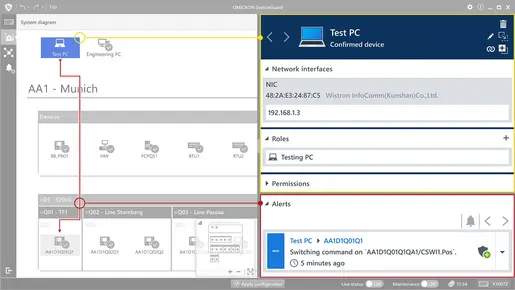
Contextualize Alerts in ZeroLine Diagram
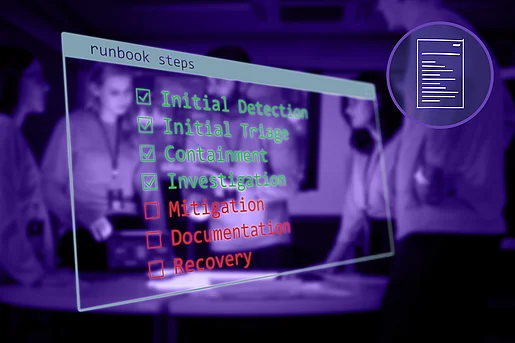
SOC Analysts can rely on built-in OT knowledge. The resulting contextualization of the alerts speeds up incident response.
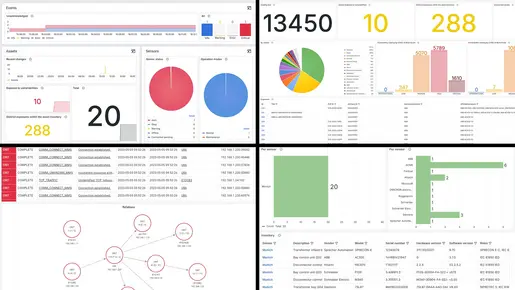
From the Grid Level …
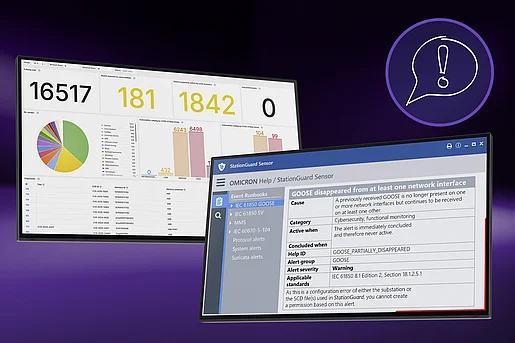
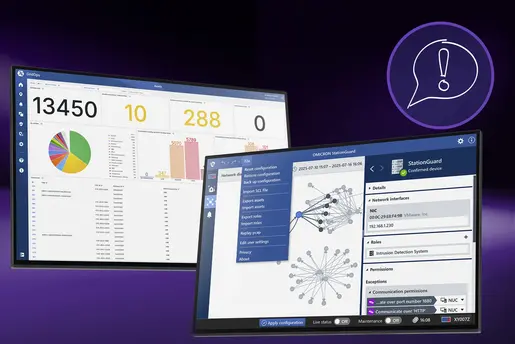
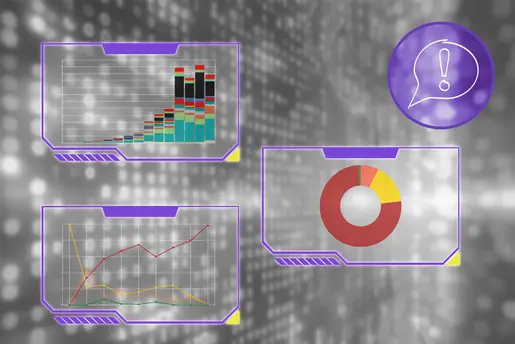
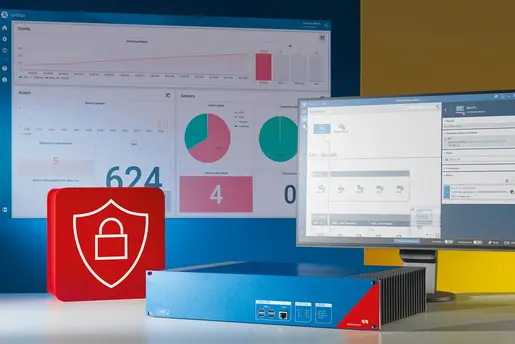
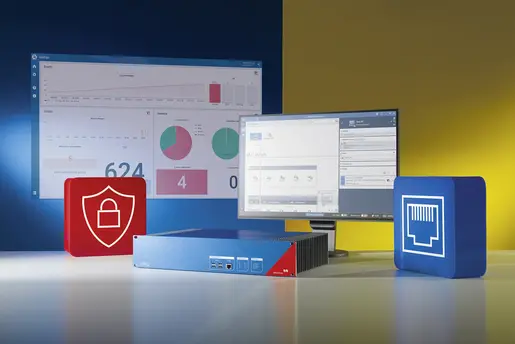
Multiple dashboards offer a comprehensive overview of all network statuses.
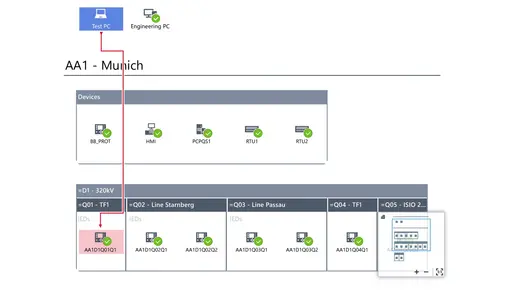
… to the Plant Level …
An intuitive network visualization allows immediate detection of events.
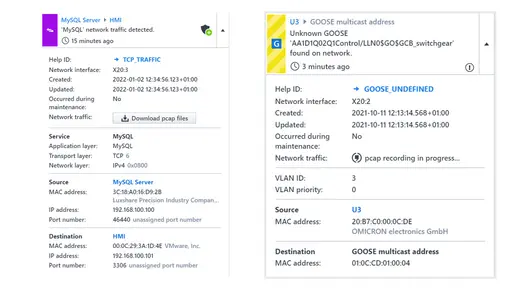
… Down to the Device Communication
With the option to visualize every asset and its communication individually.
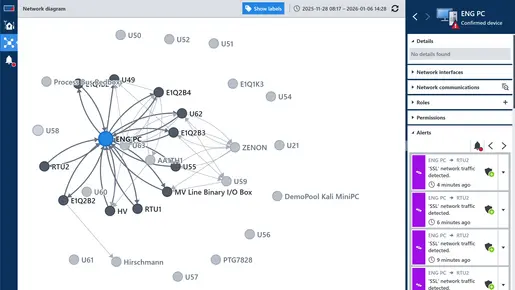
Powerful Network View
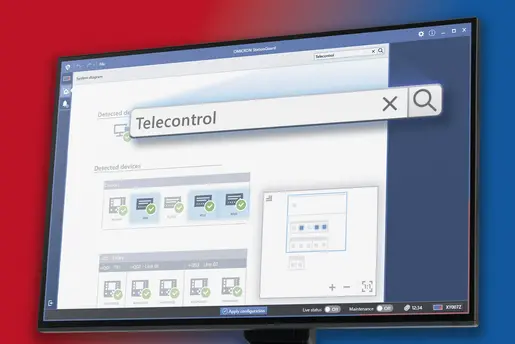
See details on devices, protocols, and communication flow to spot suspicious activity at a glance.
StationGuard's
Intrusion Detection Techniques
Frequently Asked Questions
What is power system security?
It is the practice of safeguarding generation, transmission, and distribution infrastructure from cyber threats. In OT, risk management requires a specialized mindset because digital vulnerabilities can translate into physical consequences, such as power outages or equipment damage. The goal is ensuring cyber resilience and security of supply across critical infrastructure like railways, water treatment, and power grids.
Don’t know where to start? Our experts can support you with planning your steps to comprehensive power system security: https://www.omicroncybersecurity.com/en/services
What is the difference between IDS and firewall?
Firewalls act as the first line of defense at the network perimeter but are often attractive targets for attackers. An IDS like StationGuard is a non-intrusive sensor that listens to internal traffic without interfering with protection signals. While firewalls block traffic, an IDS provides deep visibility and context-rich telemetry to uncover threats that have bypassed perimeter defenses or originated internally.
How does the IDS improve my OT asset inventory?
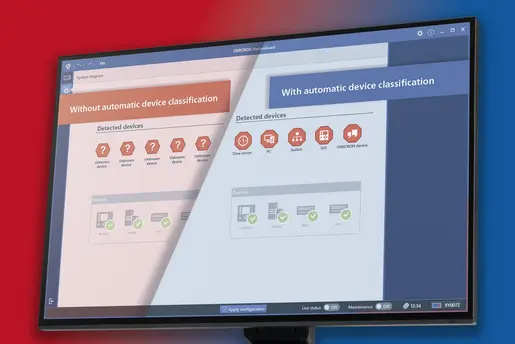
Our IDS StationGuard Sensor provides full network transparency by automatically identifying and classifying devices on the network. Using this collected sensor data, you can use central management systems like StationGuard GridOps to view and manage all assets—including protection relays and SCADA components—in one place. This automated visibility is a prerequisite for vulnerability matching, ensuring that security advisories and CVEs are accurately mapped to your real-world hardware and firmware.
Does the system provide visibility across multiple distributed sites?
Yes. StationGuard Sensor and GridOps provide structured visibility across heterogeneous networks, including substations, power plants, and control centers. This allows utilities to monitor geographically distributed assets consistently, facilitating enterprise-wide detection and simplified operations across the entire OT infrastructure.
Why can’t I use my existing IT intrusion detection tools in a substation environment?
IT tools often lack the operational context to interpret specialized power protocols like IEC 61850. Furthermore, intrusive IT security controls can be incompatible with the deterministic, real-time requirements of the grid. Unlike IT networks, substation networks have a very low tolerance for latency, making purpose-built, non-intrusive OT solutions a necessity for safe operations.
Will adding an IDS sensor increase latency or disrupt my protection and control processes?
No. The StationGuard Sensor is specifically designed as a non-intrusive network listener. It captures OT traffic and delivers telemetry without interfering with protection or control signals. This ensures that adding security monitoring does not impact the deterministic behavior or high availability required for critical power system operations.
You can find all information about our IDS here: https://www.omicroncybersecurity.com/en/products/stationguard
Documents
Resources




























Contact Us!
We’re looking forward to helping you.
- Have a question?
- Need more information?
- Would you like to request a demo?